
Spray Paint Gone Without Surface Damage
Graffiti removal in Spokane for tagged facades, stained concrete, and vandalized exterior surfaces
Brick facades and vinyl siding react differently to the same solvent—what lifts spray paint cleanly from masonry can etch or cloud a painted wood surface permanently. Resto Exteriors built its graffiti removal service around that distinction, starting every job with a substrate assessment before selecting a chemical or pressure-based approach. Property owners in Spokane dealing with fresh tags, layered marker, or oxidized overspray get a removal method matched to the material being cleaned, not a one-size-fits-all process.
The surface assessment determines which of two primary methods applies. Delicate substrates—vinyl siding, decorative trim, painted wood, and glass—receive low-pressure soft washing paired with bio-chemical cleaners that break down paint pigments without water intrusion or finish damage. Durable hard surfaces like concrete retaining walls, brick masonry, and asphalt accept high-pressure hot water blasting, which flushes spray paint out of porous material rather than simply masking it. Before any detergent application begins, surrounding vegetation, flowerbeds, and structural accents are pre-treated and protected to prevent chemical runoff from reaching landscaping or adjacent materials. Spokane's seasonal moisture patterns and freeze-thaw cycles can push residual pigment deeper into porous concrete over winter, which is why prompt removal typically produces better results than waiting until spring.
Request a surface assessment to determine which removal method fits your property's exterior materials..
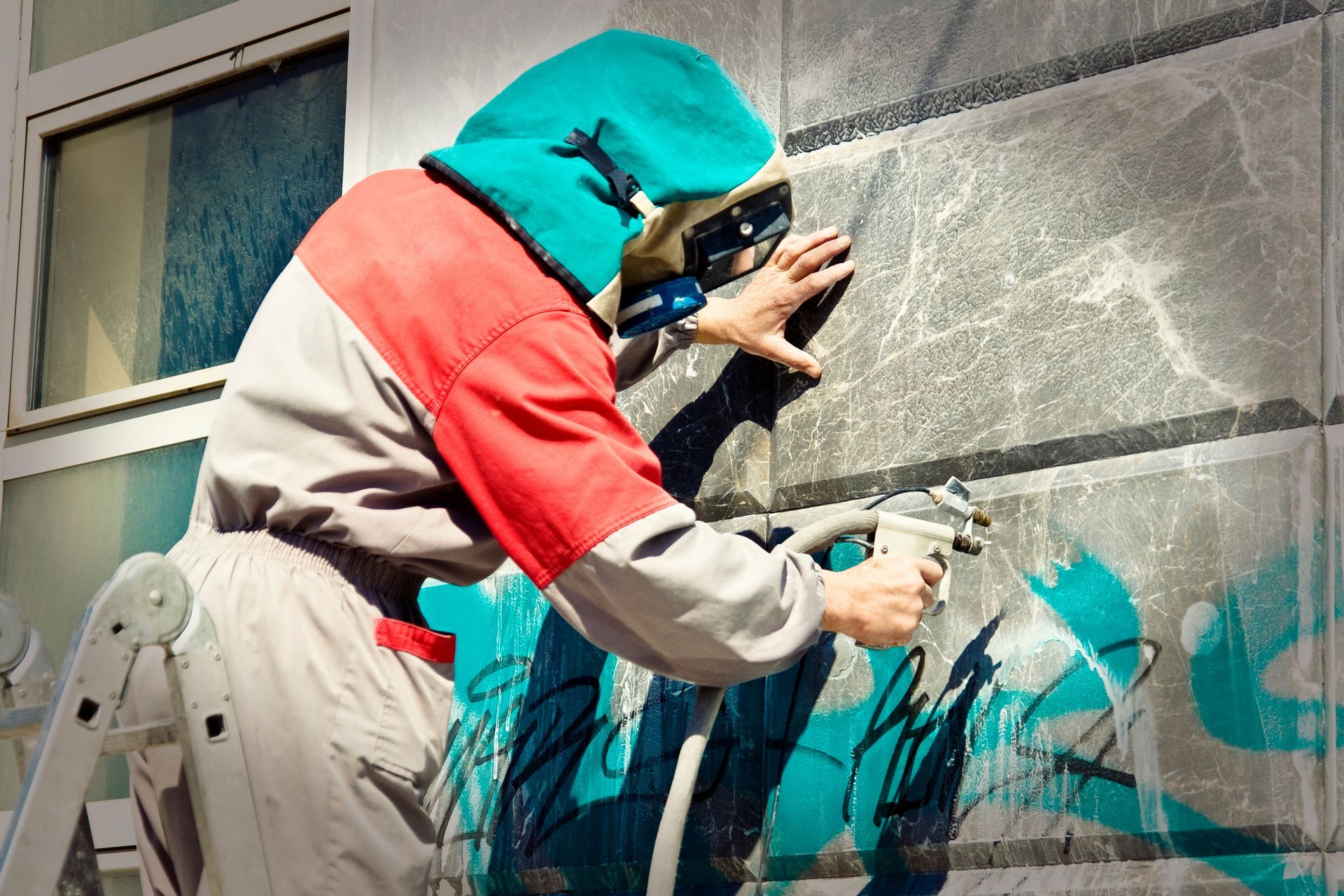
How Surface-Matched Removal Addresses Spray Paint
Graffiti removal that works starts with identifying what the surface can tolerate. Technicians examine substrate porosity, existing finish condition, and paint penetration depth before selecting a detergent formulation or pressure setting. On brick masonry, spray paint soaks into mortar joints faster than into the brick face itself, which means effective removal often requires adjusting nozzle angle and dwell time to pull pigment out of recessed areas without eroding joint material.
After the process is complete, the treated surface should show consistent coloring with no paint shadowing, streaking, or residue lines. Soft-washed vinyl and painted wood retain their original finish without clouding or surface abrasion. Concrete and brick return to their pre-tag appearance without pressure scarring or mineral ghosting—a visible discoloration that occurs when high heat is applied too aggressively to calcium-heavy masonry common in the Spokane region. Property owners frequently report that professionally removed graffiti leaves no visual evidence the tag was ever there, unlike DIY solvent applications that often lighten the tag but leave a faint outline behind.
The scope of each job also includes decisions about whether a surface needs a graffiti-resistant anti-tag coating applied after cleaning—particularly relevant for commercial storefronts or transit-adjacent walls that see repeated tagging. That option is evaluated separately based on surface type and ownership goals, and it is not automatically included in removal work..
Common Questions About Graffiti Removal
Property owners often have questions about the process before scheduling, particularly around material compatibility and what to expect from the finished surface.
What surfaces can graffiti removal be performed on?
Most exterior surfaces are treatable, including brick, concrete, vinyl siding, stucco, metal, painted wood, glass, and asphalt—each requires a different technique, which is why the initial substrate assessment determines the method before any chemicals are applied.
How does the removal process protect surrounding landscaping?
Before detergent application begins, vegetation, flowerbeds, and adjacent structural elements are pre-treated and physically protected to prevent chemical runoff from contacting plant material or non-target surfaces.
When is soft washing used instead of high-pressure blasting?
Soft washing is selected for surfaces where high pressure would cause water intrusion, finish etching, or abrasion—vinyl siding, glass, and painted wood are common examples where low-pressure bio-chemical methods outperform pressure-only approaches.
Why does prompt removal matter in Spokane's climate?
Spokane's freeze-thaw cycles and seasonal moisture drive spray paint pigments deeper into porous concrete and masonry over time, making removal more difficult and sometimes incomplete if the tag is allowed to set through a winter season.
What does a completed job actually look like?
The cleaned surface should show uniform color and texture with no visible outline, shadow, or streaking from the removed paint—if a faint impression remains after drying, that typically indicates incomplete pigment extraction rather than a fully finished result.
Resto Exteriors serves residential and commercial properties across Spokane, including storefronts, multi-family buildings, fences, and parking structures. Contact Resto Exteriors to schedule a property walkthrough and confirm the appropriate removal method for your specific exterior materials.